1002. Which Is Better? Experience or Naivety.
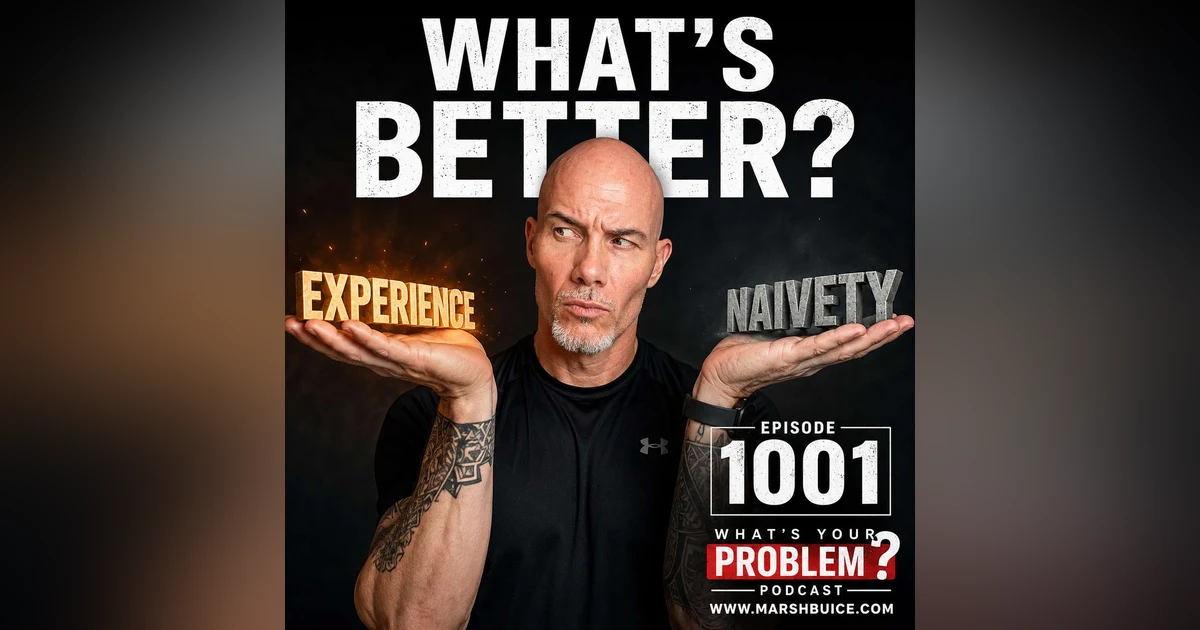
Send us Fan Mail What’s actually better—experience or naivety? Most people think experience is the ultimate advantage. But the longer I sat with it, the more I realized experience can also make you rigid, judgmental, and closed off to new possibilities. At the same time, naivety—when used correctly—isn’t weakness. It’s openness. It’s curiosity. It’s creativity. In this episode, I break down why some of the biggest breakthroughs in life, sales, business, and creativity happen because people we...

 Apple Podcasts
 Spotify
 Castro
 RSS Feed
 What’s actually better—experience or naivety?
Most people think experience is the ultimate advantage. But the longer I sat with it, the more I realized experience can also make you rigid, judgmental, and closed off to new possibilities. At the same time, naivety—when used correctly—isn’t weakness. It’s openness. It’s curiosity. It’s creativity.
In this episode, I break down why some of the biggest breakthroughs in life, sales, business, and creativity happen because people were naive enough to try before they knew they “couldn’t.”
I also share why James Dyson (Against The Odds, phenomenal book by the way) prefers hiring inexperienced people because they think differently and aren’t trapped by assumptions.
This episode is about learning how to lead with naivety while backing it with experience. Staying open without becoming reckless. Staying experienced without becoming hardened. Because if you only live from what you already know, you’ll miss everything you still could become.
📣Who needs to hear this episode? Please share with ONE PERSON who needs to hear this message.
🛑 Watch & subscribe to episodes on my YouTube Channel: https://www.youtube.com/channel/UCiNqFo05MJ6_yCu1vJ3rX4A
📝Show your ❤️ by thumbing a quick rating and review for any platform: https://www.marshbuice.com/reviews/new/
🤝See my daily stories: https://www.instagram.com/marshbuice/
💭 Daily thoughts on X @marshbuice
💼 Blog posts on LinkedIn @marshbuice
👩💻 FREE Content! www.marshbuice.com
Keep it simple. Keep it moving. Never settle. Stay tough.
All right, three, two, one, let's get it. Experience or naivety? Which one's more important? That's the question that I was asking myself today. Is it possible for me to be both experienced and naive? I don't know. Because if you think about someone who's naive, it's like you lack competence. And if you lack competence, then I lack confidence, not only in myself, but then as a naive person, people don't have confidence in me. So then you think about experience. And if I'm too experienced, well, I'm judgmental. I'm condescending. I'm a conformist. I'm less likely to try things. I'm rigid. I mean, the list goes on and on and on. Think about experienced people that you've been around. Some people with a lot of experience, a lot of smartness. I mean, they're quick to tell you how long they've been doing something. And I think you can have the best of both worlds. When I sit here and think about this, bro, can you is it good to be naive or experience? Can I be both? I'm a have your cake and eat it too kind of guy. Absolutely you can. And I'm gonna prove it to you. See, you should lead your day with naivety backed with the assurances of experience. It's almost like a life insurance policy for you. Now, with experience, I I know what you're thinking. Let me tell you, I know what you're thinking. You think that naivety or being naive, like you're stupid, foolish, Homer Simpson, like don't. I I get it. But naivety is actually an asset because when you think about someone who's naive, or times that you've been naive, you're open, you're curious, you're creative, you you just because you don't know any better, right? I I tell new salespeople, I'm like, when you start, you you don't know anything. You think every customer is the best customer in the world, you think every manager is just in the know. People are great, customers are great. But what happens is it's it's kind of like I'm gonna age myself here. It's kind of like having a record, you know, one of those big, well, it's not the 45, whatever the big, the big albums were. Well, I guess albums are making a comeback. So it's the album, but it's it doesn't have the lines on it when you first start something. And then as you start, you imagine, you know, when you look at a record and it's obviously got recorded songs on there, it's it's got these grooves on it. That's that's what happens to us. And with experience, we get more and more grooves until you started with big opportunities, but now you've ended, and you know, you've got this little bitty circle, and that and that's what's happened. Because your main filter is experience, and you've stopped being naive. Naivity has its place. Again, because you're open, you're curious, you're creative, you're collaborative, you're the first one to say, I don't know. And so you just you just kind of figure things out as you go along the way. And and think about times when you've been naive. Think about when you started something thinking you're gonna have it licked in a certain amount of time. I mean, I thought when I started the podcast back in 2017, I was gonna do it for a year and I was just gonna blow up to the top. Going on 10 years later, that is definitely not the case. If someone would have told me, Marsh, you're gonna put in 28 years in sales, and you're you're gonna be about a high freshman, early sophomore grade level. 28 years. I have experience. I'm confident in what I do, I'm competent. But bro, I just tweeted this the other day. Selling is like a like the game of golf. You never master it. I'll probably and hopefully will forever say a freshman or sophomore because I don't want to get too experienced. But back to my point, it's kind of when you say, if I know if I knew then what I know now, but that's naiveness. Because of naivety, you didn't know you couldn't talk to certain people. You didn't know you couldn't do certain things. No one told you those things. But look at where you are, look at how far you've gone, and you look, you're like, bro, what was I even thinking? Like, how in the hell nobody stopped me? That is a beautiful thing. This is why I say naivety in its place is an asset. You don't want too much or too little. So you have to think of naivety and experience. It's got to be kind of a switchback, switchback like a railroad. So you're going down the tracks, that's experience, but you want to have that switchback at times with naivety, where you can switch and be curious and be creative and have the courage and say, Man, I don't know. Let's let's give it a try, even if it's incremental. I'm gonna try it. You're willing to look foolish, you're willing to try new things. There's there's actually an air of authenticity about you, too. Because when people see that you're not afraid to laugh at yourself and try new things and you're doing it along with it. I mean, think about when someone starts with you. When they mess up, you don't be like, ah, no, you're like, oh, okay, let me show you this. Here's a better way to do it. But also, don't be so heavy on experience because new people can teach you something too. I'm reading James Dyson's book Against the Odds, Dyson's Vacuum Cleaners, Dyson's Appliances. Phenomenal book. And he's talking about when I when I read books, I like to also listen when possible to podcast because sometimes you can get the in-between the lines that didn't make the book, but also it adds a richness and context to it. So I was listening to a conversation with David Sinro, one of my favorite podcasters out there, David Sinra, with his hero, James Dyson. And James Dyson said, I really don't care for experienced people. I actually don't hire experienced people. I love the naiveness in new people because they don't know anything. So they're less judgmental. They have to think hard on a tap where an experienced person could probably look at the same thing and be like, he loves the naiveness because it brings a new perspective. It's a new way of doing things. He actually welcomes people from other departments to come in and share their perspective. Instead of being compartmentalized, well, you're in the design department or you're in the manufacturing department or you're in the billing department. It's an open door, like literally. They draw on those things. So people from other departments shed insights. Some of the stuff they use, sometimes they don't. But see, that's where you lead naively. You're open to that collaboration. So back to my point, Dyson is like, I really don't like experienced people because think about this. Experienced people are very judgmental. They think they already know what the outcome is going to be before they even try. But we're all guilty of hanging our hat on experience. But the problem with that, it becomes a noose and you hang yourself, and it's death by your own hands to opportunities, to new skills, to collaboration, to other doors opening, a freshness gone because you're weighing too heavily on experience. So here's what I want you to try lead with naivety. Back it with experience. It's your safety net. Think about it like this it's not that you're not going to fall, you're open to falling, you're open to failing because failing is iterative. Failing means I'm trying new things. Failing is a process. So as you try new things, not only do you get a fresh perspective, I have to fight against that every day, man. I'm 28 years in sales. I have to fight against being experienced. Sometimes I need to say, I don't know. Sounds cool. Let's try it. And it doesn't mean you just no, I'm not saying that at all. But when you look at it as a switchback, am I being judgmental here? Am I being afraid of how I may look? Am I protecting my title? Am I being shut off to other people? Because people don't like, you know, people, yes, people need you to be experienced. They need you in tough times to be experienced, but there's times too, man. You got to be open, you got to be collaborative. Even in tough times, man. You got to be naive because it's what you don't know. But if you just sit here and run your day based on what you know, you're missing out on what you don't know and what you could know and what you could learn. That's all I'm saying. So here's my challenge to you lead with naivety. Back it with experience. Now here's the interesting thing. When you lead with naivety, and it's you and you have the safety net of experience, that naivety keeps you curious. You can try new things, but then reflect on it with your experience. What worked, what didn't work, what surprised me. Not judgmental at all. And you're going to find when you lead with naivety and back it with experience, the experience, you'll be more efficient. So not only will you get a new set of skills and new way of doing things, and actually bring more people into your team because you're open to things, but you'll you'll learn how to be more efficient. And I will tell you this too, as I'm thinking this out loud, there's a depth to experience, but there's also a depth to naivety, too. There is. Two experience gets that that soil, think of like clay, it just hardens up. But that naivety actually scratches that old soil, drums up a fresh new soil, which allows you to dig deeper. See, naivety and experience need one another. They do. But where do they have their place? Lead with naivety, recap it with experience. You stay open, you stay curious, you stay creative, and before you make a judgment on something, ask it in the form of a question. Don't be so quick to judge. Don't be a no at all, be a no at all. Have that openness to learn more and add it to what you know now. All right? Before we get out of here, please, if you would leave a rating and review. Why do you come back to what's your problem, the podcast? How does it help you? Which episode helped you? There's millions of podcasts out there, and it could be your voice that causes them to listen and changes everything in their world. Also, make sure that you check out the website, marshbice.com. That's my name.com. And the bottom right is a mic from you to me. What's going on in your world? How can I help? I'm no hair, but I'm all ears. All right, with that, remember keep it simple, keep it moving, never settle, stay tough.